Sep 6, 2026Journal entry
When Cuba Became Home: Living Through the Pandemic in Havana
I moved to Havana in 2019, married my wife, and lived through the first months of COVID in Cuba. This is how the country treated me when life got hard.
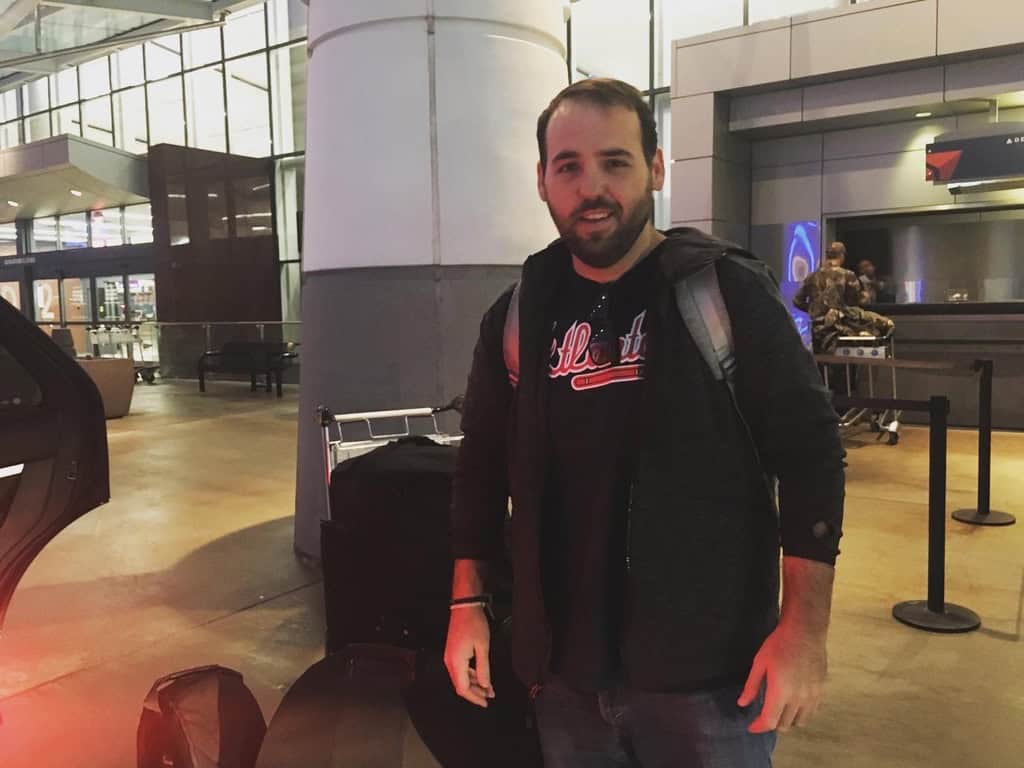
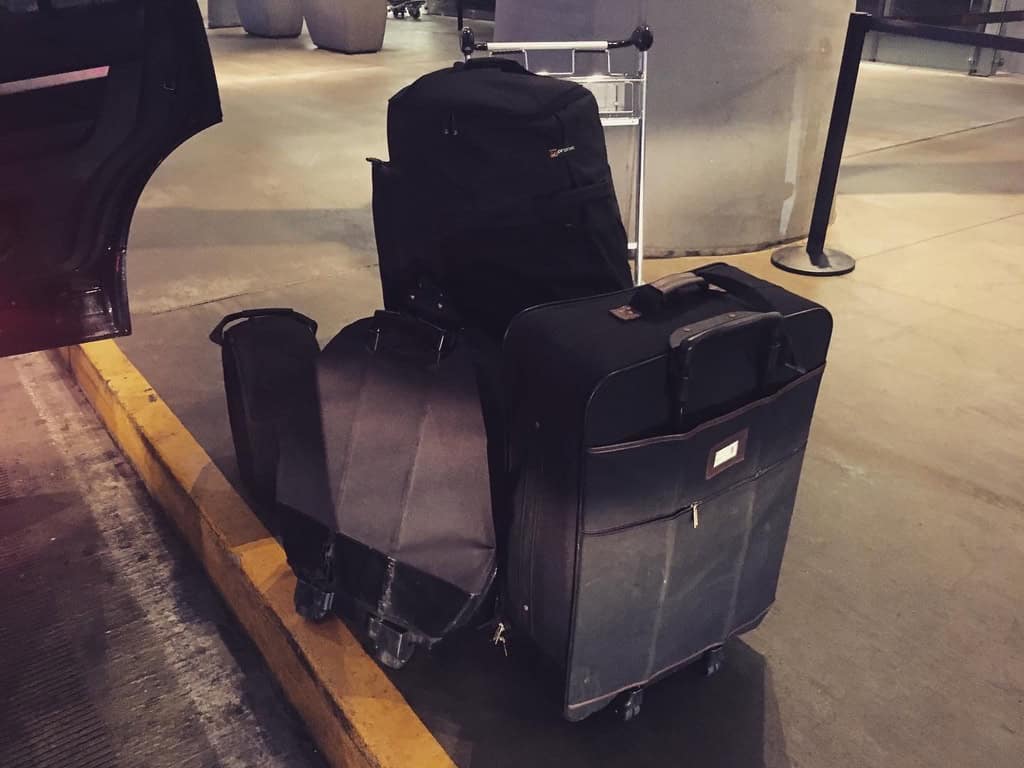
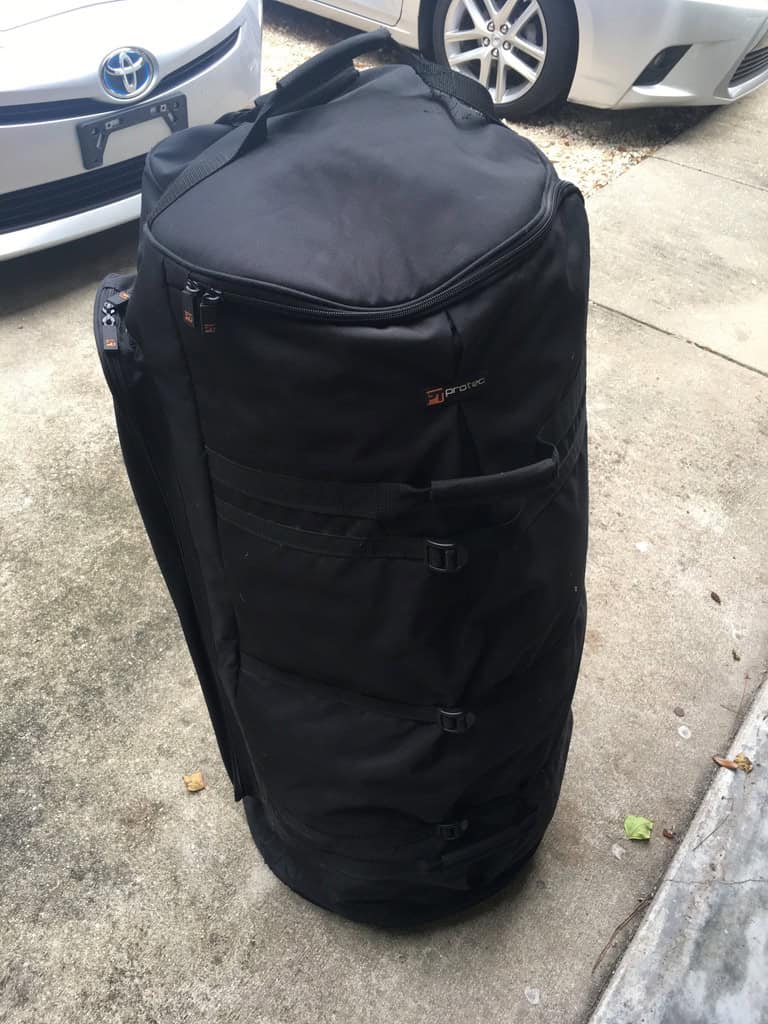
In late 2019, I went through the airport in Atlanta with a small drum set, a compact recording setup, and whatever else I had decided I needed to live in Havana. At that point my life in the United States had already become pretty stripped down. A lot of the time I was basically living out of my music studio on the Westside of Atlanta. I had family around me and my grandmother's house if I needed somewhere to go, but I wasn't building much of a conventional life there. I wasn't making much money, I had sold a lot of gear and other things I owned, and more and more of my actual life was in Cuba with the woman I was planning to marry.
A few years earlier, none of that would have made much sense. I had been interested in Cuban music for a long time and studied a lot of it, especially while I was in music school. I am a drum set player, and Afro-Cuban rhythms and styles had been part of the musical language I was trying to understand for years. What changed was the opportunity to actually go there. During the opening between the United States and Cuba in the Obama years, a country that had seemed mostly prohibited for much of my life suddenly felt reachable. Commercial flights were returning, travel was becoming easier, and I could go study with Cuban musicians, hear the music in the environment where it developed, and learn more about the culture surrounding it.
That was enough reason for me. I wasn't trying to make some grand political statement when I first went. I was a musician who had always been intrigued by Cuban music, and a door had opened. I wanted to walk through it and learn. Those first trips led to more trips, friendships with musicians and musicologists, and eventually Havana Music Tours, which I started in 2017 as a very small operation built around the relationships and experiences I was developing there. Somewhere in the middle of all of that, I met Yamilka, a Cuban musicologist whose world naturally overlapped with many of the musicians and cultural circles I had already started getting to know. I've written more about the musical side of that journey here, but this story is about what happened after Cuba became home.
From the Westside of Atlanta to Marianao
By 2019, the back-and-forth between Atlanta and Havana had started to feel less logical than simply living where so much of my life already was. Sometime around October or November, I packed the small drum kit, my recording gear and the rest of what I needed, and moved into the two-bedroom house Yami owns in Marianao. She still owns that house today. Looking at the airport photos now, I can see a version of myself who had no real idea what the next year was going to look like. I knew I wanted to marry Yami, I wanted to keep making music, and I wanted to keep building the life that had started to take shape in Cuba. That was about as far ahead as I was thinking.
Making a Home in Marianao
The house in Marianao was humble and very ordinary, which is part of why I loved living there. It wasn't the Havana that most visitors first encounter through Old Havana, hotels, restored plazas or tourist restaurants. About a block away from us the neighborhood could be chaotic, with people waiting for transportation, buying things, selling things, talking across the street and moving through whatever the day required. The house itself was open to that noise in a way most houses in the United States are not. The windows had slats that never really sealed everything outside, and most of the house relied on fresh air and fans. The only air conditioner was in the bedroom, and it was loud enough that you would think it could drown out almost anything.
It couldn't. There were some young guys who used to play video games in the alley right outside our bedroom window until three or four in the morning, talking and yelling the entire time. They could wake me up through the air conditioner. I also played drums in the second bedroom of a house with windows that barely closed, so I can't pretend I was the quiet neighbor either. The funny thing is that nobody seemed especially bothered by it. After a while, people around the neighborhood started recognizing me as the guy who played drums. Someone would see me walking and say something like, "You're the drummer, right?" It was already a noisy neighborhood, and somehow the drum set just became another part of it.
I set the small kit up in the second bedroom along with the recording equipment I had brought from Atlanta. That room became my little studio. I practiced there, recorded there, made videos there and had musician friends over. It is one of the details I want to preserve in this story because it shows how normal living in Cuba had become for me. I wasn't visiting for a week with a pair of sticks in my suitcase. I had a drum set and recording gear in my wife's house, and I was making music there as part of everyday life.
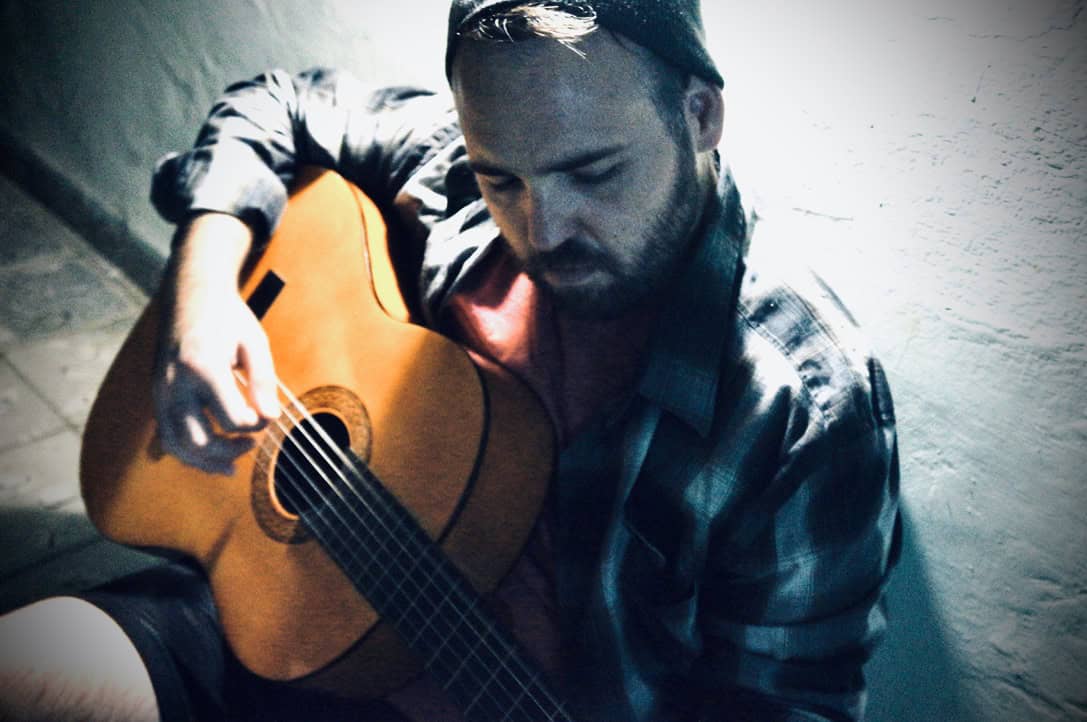
Music was everywhere in that period of our lives. Yami is a musicologist, and her world overlapped naturally with the community I had already started entering as a drummer. Someone we knew might be playing at La Zorra y el Cuervo one night, on a rooftop somewhere else the next night, and then at Fábrica de Arte Cubano. Some of those same people might be at our house later. We had little parties there that I still think about, with friends coming through, people talking, music playing and the kind of casual social life that was becoming normal to me.
Living there gave me a kind of context for Cuban music that I could not have gotten from simply knowing the rhythms. I had already studied the music. What changed was that the music stopped being something separate from the rest of life. It was connected to neighborhoods, family, religion, history, humor, economics, celebration, frustration and the way people interacted with each other every day. I went to Cuba wanting to understand the music more deeply, but over time I became just as interested in the social world around the music.
That social world made a huge impression on me. People talked to each other. Neighbors knew each other. Friends stopped by. When we visited Yami's grandmother in Ciego de Ávila, it could feel as though somebody was coming to the door every few minutes. A person might bring her something, ask for something, check on her or simply sit down and talk. There was a social infrastructure around people that had nothing to do with an app, an appointment or a formal service. It was simply how life worked, and I still have a hard time recreating that feeling in the United States.
There were limitations, of course. Internet access was one of the strangest things to adapt to. We did not have home Wi-Fi, so most of what I did online depended on mobile data, and the data was metered and expensive enough that you paid attention to what you were using. That created this whole offline ecosystem that was completely normal in Cuba. One of the best examples was El Paquete Semanal. Guys would come around with hard drives full of that week's movies, television, music, software and other digital content, leave the drive with you for a couple of hours, and for a small amount of money you could copy what you wanted. In a place where streaming everything over home internet wasn't realistic, it was an incredibly practical part of everyday life.
The electricity situation during the period I lived there was also different from the much more severe power problems Cuba would face later. We had some outages, but for the most part the electricity stayed on. The bigger day-to-day frustrations were usually connectivity, transportation and finding things. A simple online task for the business could take far longer than it should, and a simple errand could turn into a search through the neighborhood. Still, there was something about the rhythm of that life that I enjoyed. We worked, I practiced, we saw friends, we went to hear music, we tried to find what we needed, and we came home.
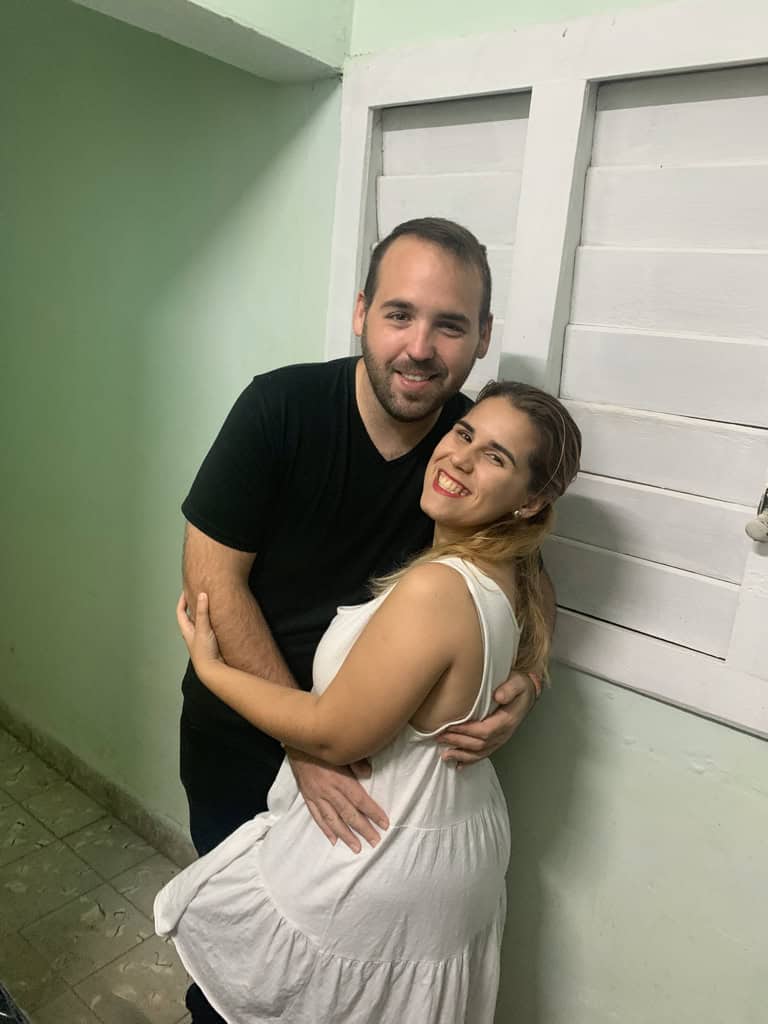
Getting Married
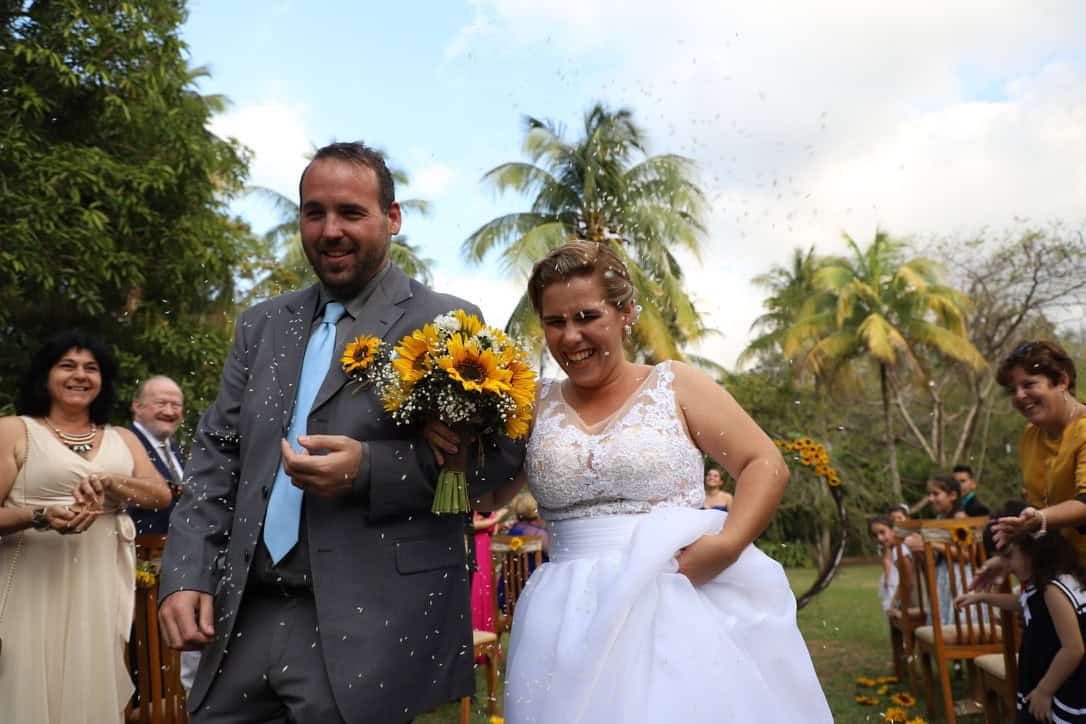
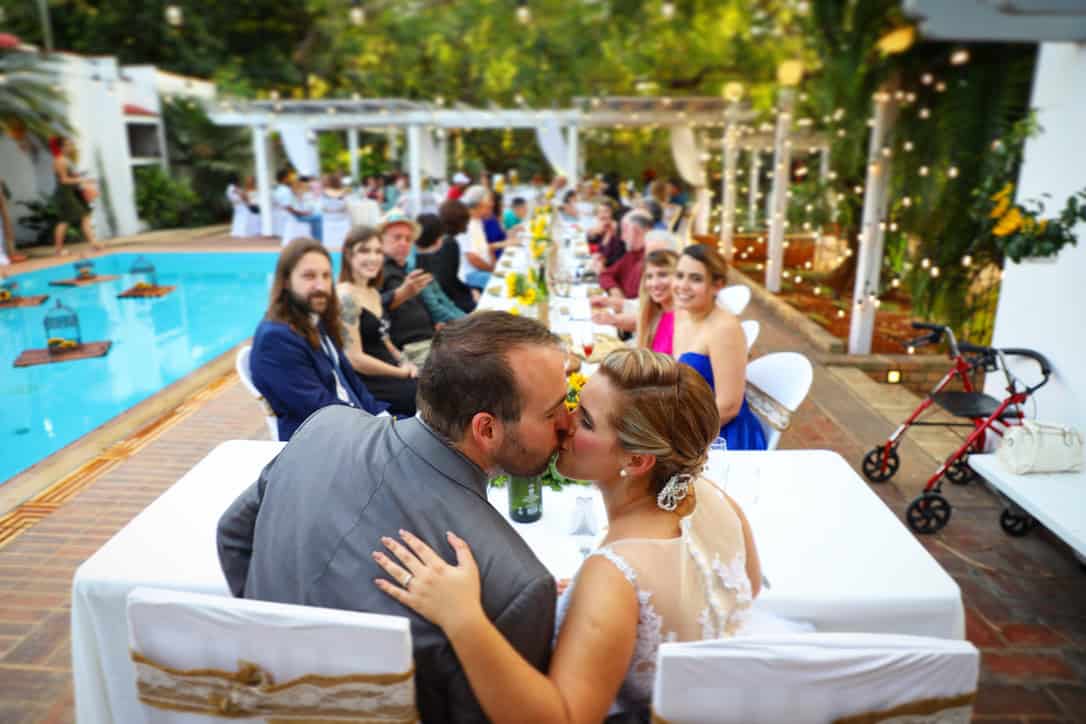
On February 16, 2020, Yami and I got married at La Campana, not too far from Havana. I wrote briefly about our wedding at the time, before any of us understood how much the next few weeks were going to change our lives. We had friends and family around us and, at that point, I wasn't thinking about getting her to the United States as quickly as possible. We were happy there. The United States might eventually become part of our future, but there was no sense that our life in Havana was something temporary that needed to end. I had the drums and recording gear set up at the house, Yami was home, and Havana Music Tours had just come through what was then its busiest season. We were newly married and figuring out the next part of our life together.
That matters when I think about what happened next because the pandemic did not trap me in a country I had been trying to leave. It interrupted a life we had deliberately chosen. Only a few weeks after the wedding, everyday life in Havana began disappearing around us.
When the World Shut Down
In March 2020, as COVID spread across the world, Cuba announced major restrictions on international entry. There was a short period when foreigners already in the country could still reorganize their travel and leave, and I remember having to make a decision that suddenly felt much bigger than anything I had planned for. I could try to return to the United States while flights were still moving, but Yami and I had been married for only about a month. If I left, I had no idea when Cuba would reopen or when I would see my wife again.
Nobody knew how long any of this was going to last. We did not know whether the pandemic would disrupt travel for a few weeks, a few months or years, and I had no idea how humanitarian or repatriation flights would work later. Leaving my wife at the beginning of something this uncertain made no sense to me, so I stayed. From that point forward, our plans became much smaller and more immediate. We stopped thinking very far ahead and started figuring out what we needed to do to get through the next several months.
The financial side changed almost overnight because nearly all of my income depended on tourism. Havana Music Tours was still young and relatively small. Years later, we would bring nearly sixty people to Havana around the Jazz Festival in several different small groups, but the company in early 2020 was nowhere near that scale. I had some operating money that needed to stay with the business, but personally I had very little. Yami and I looked at what we had and made what I remember as roughly a six-month plan, trying to keep our personal living costs down to only a few hundred dollars a month for the two of us.
The Little Circle Around Our Neighborhood
The budget itself is not the part I remember most clearly. What I remember is how it changed the way we moved through the day. Almost every day, or at least most days, Yami and I took the same little walk around the neighborhood. We weren't confined to the house in the sense that we were forbidden to leave, but there was nowhere much to go, there was no music happening, transportation had largely disappeared, and everybody was trying to stay away from each other. Our little route took us past the places where we knew food or basic things might appear. Part of the walk was simply getting out of the house, and part of it was reconnaissance: what does this store have today, did anybody hear that something came in, is there a line forming somewhere, does somebody know somebody who has eggs?
Eggs became their own recurring problem. There always seemed to be some version of an egg issue in Cuba: either they were difficult to find or the price had become ridiculous. There was one guy on our regular route who was one of the nicest people in the neighborhood and somehow became my go-to source for egg intelligence. I would walk by, talk with him for a minute and ask whether he had any leads, and more than once he managed to point me in the right direction or help us find some. At one point he was asking me about helping him get some kind of cable service set up for a few dollars a month. Those little exchanges are exactly what I remember about living there. Once you knew the people around you, finding something was not only about going to a store; it was about conversations, information and people helping each other navigate what was available.
The pork story was the more extreme version of the same thing. At one point I heard that a carnicería had pork and went there hoping to get a large enough piece, maybe part of a leg, that we could bring home, cut up, freeze and use slowly. I stood in line for hours because having that meat in the freezer gave us something we could stretch over time. Those lines became more common as the pandemic continued. There is nothing romantic about that kind of scarcity. It was difficult, and for Cubans who did not have the possibility of eventually getting onto a flight to the United States, it wasn't some temporary cultural experience. But for the first time, I was living inside those practical problems rather than seeing them from the position of somebody who knew he was leaving in a week.
For the first couple of months especially, our physical world became tiny. We barely went into the main part of Havana. We were way out in Marianao, mostly walking our neighborhood and coming back to the house. I remember seeing photographs of Old Havana and the Malecón almost completely empty and realizing that we had not even been over there in months. The city I had known through gigs, friends, restaurants, visitors and constant movement had almost disappeared from our daily routine.
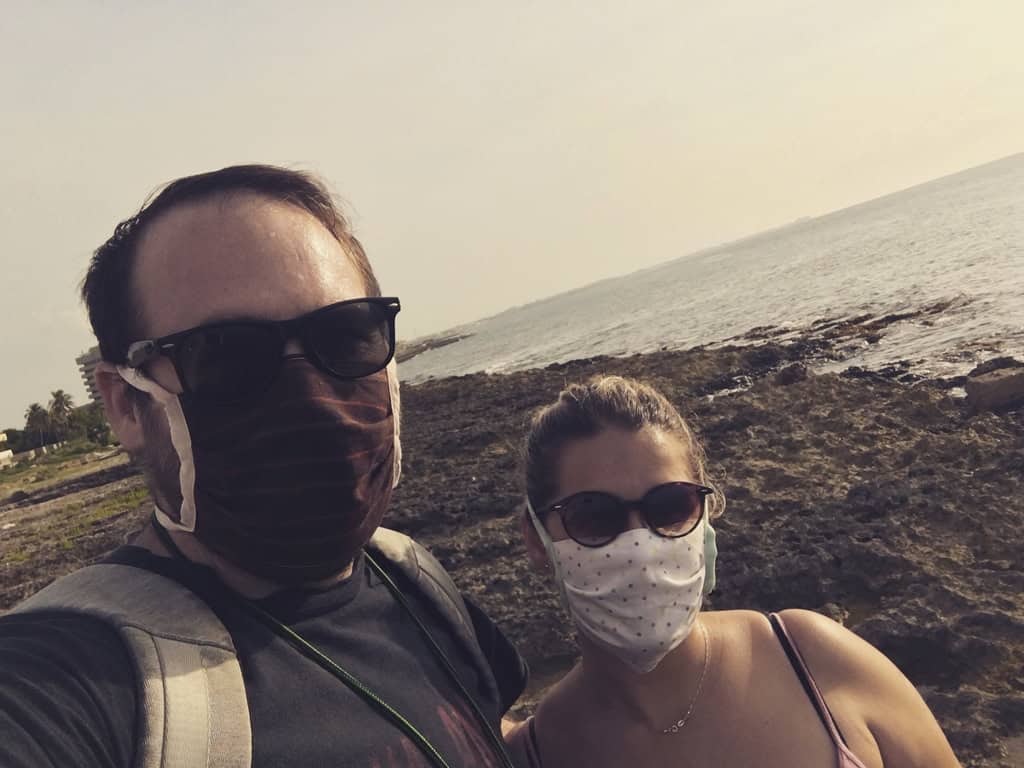
At home, we kept working on whatever we could. We never really stopped trying to build things for the future, even though we had no idea when tourism would return. Because we relied on mobile data and the network was under enormous demand, daytime internet could become painfully slow. ETECSA introduced pandemic measures that made mobile data packages go farther overnight: from 1:00 to 6:00 in the morning, data was counted at half the normal rate. For us, that was enough reason to reorganize our lives around it.
For about a month, Yami and I basically flipped our days and nights. During the normal working hours, when everybody was online and the network was struggling, heavier work could be almost impossible. We would stay up through the night and use those quieter hours to upload content, work on websites, prepare tourism material and keep building things for Havana Music Tours and Musical Getaways. Then we would sleep at strange hours during the day. It felt a little like being back in college, except instead of staying up because I had procrastinated on something, we were doing it because the phone network worked better and our data lasted longer at three in the morning.
That detail probably sounds absurd now, but it captures how we were living. We adapted to whatever system existed. If the best time to fix something on the website or upload content was four in the morning, we worked at four in the morning. If somebody knew where eggs were, we walked there. If the guy with El Paquete showed up, we copied what we wanted while we had the drive. If a store had pork, you got in line. The larger world had stopped, but inside that little house we were still trying to work, make music and imagine that eventually there would be something on the other side of the pandemic.
How Cuba Treated Me
The part of the story that has stayed with me most, especially when Cuba is discussed only through political conflict, is how the country treated me when all of this became difficult. Under normal circumstances, as a foreigner I had to pay for medical coverage, and there were immigration renewals and other costs connected with remaining in the country. I was married to a Cuban citizen by then, but I had not completed the full process of becoming a permanent resident. When everything shut down and my income disappeared, I genuinely did not know what I was supposed to do about any of it.
When I dealt with Cuban immigration, the answer was basically to stay with my wife and not worry about the normal costs. The immigration expenses I expected were waived or suspended, and the medical-insurance cost I normally had as a foreigner was waived as well. I remained covered. That mattered to me because Cuba could easily have treated my status as one more administrative problem at a moment when I had almost no money coming in. Instead, my experience was that they made it easier for me to remain with Yami and get through the emergency.
Then there were the healthcare workers coming through the neighborhood. Cuba's early COVID response relied heavily on its primary-care network and door-to-door screening, and I remember people coming to our house at least two or three times asking how everyone was doing, whether anyone was sick and whether anyone had symptoms. I had already been struck by how much social life in Cuba happened at people's doors. Before the pandemic, it was friends, relatives and neighbors coming by. During the pandemic, when everybody was supposed to separate from one another, the health system came to the door instead.
That made an impression on me that I have never really shaken. I was a citizen of the United States living in Cuba during a global emergency. Our governments had spent generations in conflict, and the relationship had already become more tense again by the time COVID arrived. Cuba itself was under enormous economic pressure. I had almost no personal income left and no clear timeline for when I could leave without separating myself from my wife. Yet my experience was not that the country treated me as a problem or an enemy. It let me stay with Yami, kept me medically covered, and sent people from the public health system into our neighborhood to make sure we were okay.
Living there made it increasingly strange to hear Cuba reduced to a political symbol. The things I was experiencing were not theoretical. I was standing in a neighborhood in Marianao watching how people found food, how neighbors communicated, how healthcare workers moved through the community, and how a public system responded to me when I was the foreigner who needed some flexibility. The shortages were real, the transportation problems were real, the internet limitations were real, and I watched conditions become harder as the pandemic went on. I also know the electricity situation and many other problems became much worse in the years after the period I lived there. But material difficulty and human generosity can exist in the same place. Cuba could be hard to live in and still be extraordinarily kind to me, and both things were true in my experience.
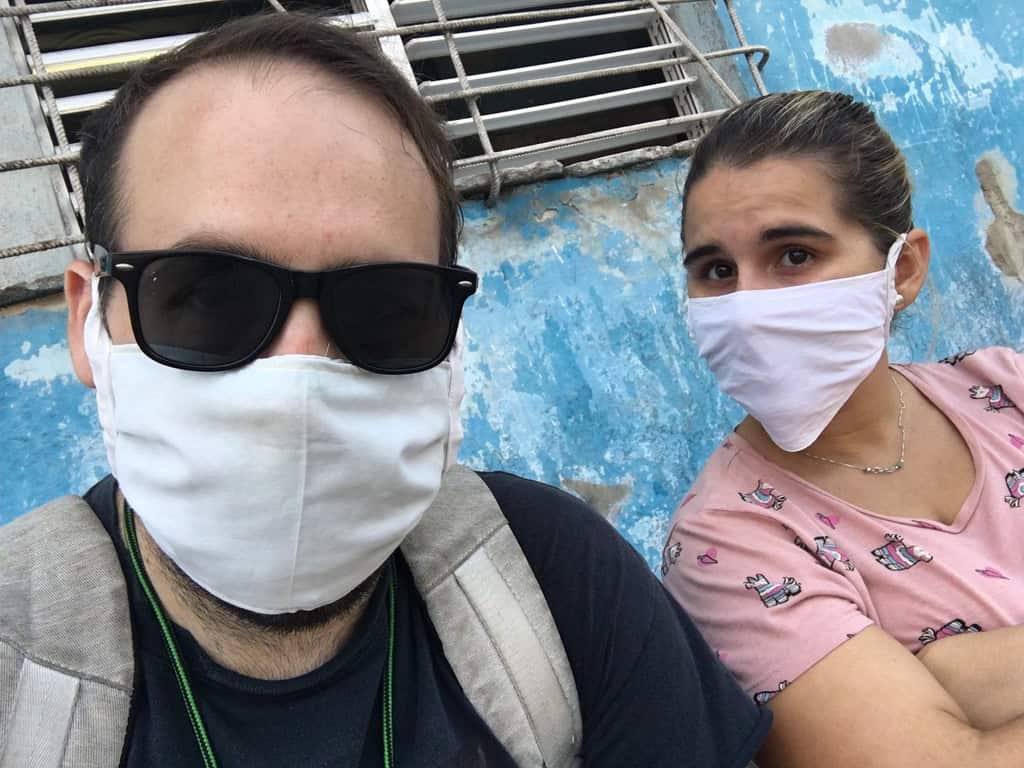
That is why the political part of this story is difficult for me to separate completely from the personal part, even though I don't want to turn this into an article telling people what politics they should have. I watched the opening between the United States and Cuba create opportunities for people to travel, meet one another and work together. Through my own small company, I watched travelers move through a network of Cuban musicians, guides, drivers, restaurants and other private businesses. Then I watched U.S. restrictions tighten again, followed by a pandemic that stopped almost all of it. Once the people affected by those decisions are people you know personally, foreign policy stops feeling like an abstract debate.
That experience is part of why I have spent so much of my adult life believing in engagement rather than isolation. I have always run my businesses within U.S. law and the OFAC rules governing travel and commerce with Cuba, and I take that seriously. At the same time, I have tried to build relationships across the divide because I have seen what can happen when people actually meet one another instead of only hearing about each other through politics. Music was the first bridge for me. It gave me a reason to go somewhere I had known mostly through the conflict between governments, and then the people I met there changed the rest of my life.
Leaving Cuba and Starting a Different Process
By late summer 2020, the little financial plan Yami and I had made was reaching its limit. Tourism was not returning, the company could not support us, and there was only so long I could remain in Cuba without finding a way to earn money again. As it became clear that I needed to return to the United States to work, Yami and I also had to confront a question that had not felt urgent before the pandemic: where were we actually going to be able to build our life together if I could no longer make a living in Cuba?
That was when we decided to begin the U.S. immigration process for Yami. Before I left, we started gathering the paperwork we would need: our marriage documents and the other records required to begin the legal process through U.S. immigration. I don't remember now whether I actually submitted everything immediately before I left Havana or right after I got back to the United States, and I don't want to invent a precise date that I no longer remember. What I do remember is that we made the decision before we separated. If I had to go back to the United States to work, we were going to start the unknown process of figuring out how to get my wife there too.
Eventually I got onto one of the humanitarian or repatriation flights coordinated through the U.S. Embassy and flew back without her. Leaving did not feel like escaping from somewhere I wanted to get away from. I was leaving the house where Yami and I had started our marriage, the second bedroom where I had set up the drums and recording equipment, the neighborhood where people had started recognizing me as the drummer, the little circuit where I knew who to ask about eggs, our friends, and most importantly my wife. I didn't know exactly how long we would be separated or how the immigration process was going to unfold. I only knew that our money was running out and I needed to go back to the United States and work.
Once I got back, I took whatever work I could find. I taught private drum lessons, looked for music work and took gigs when they existed, drove Uber, and delivered food through DoorDash and Uber Eats. I wasn't especially concerned with whether those jobs fit some image of what my career was supposed to look like. My wife was still in Cuba, the tourism business I had spent years building had effectively stopped, and I needed to earn money while working through the immigration process and trying to figure out how we could live together again.
What happened next became its own story. In the middle of the pandemic, with all of the uncertainty around travel and immigration, I was eventually able to get Yami to the United States about six months after I left Cuba. How that happened, and everything that took place between that humanitarian flight and finally being together again, deserves its own chapter. When I write that part, I'll link it here.
What Stayed With Me
More than anything else, I remember the ordinary details. I remember the sound of the air conditioner in our bedroom and the guys playing video games in the alley outside anyway. I remember my drums carrying through those windows and people around the neighborhood eventually knowing who I was because of them. I remember the little parties at the house, the guy who always seemed to know where the eggs were, the weekly hard drives full of El Paquete, and Yami and me shifting our lives into the middle of the night because mobile data worked better then.
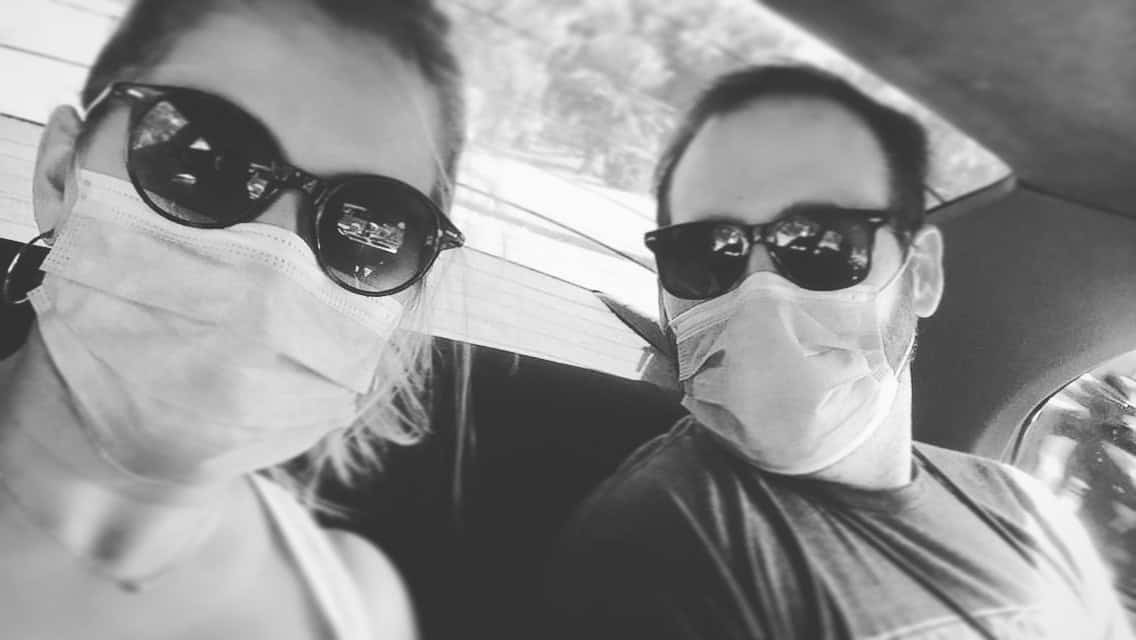
I remember our wedding at La Campana and how normal our future felt in February 2020. Then I remember masks, the same daily walk around Marianao, trying to find food, standing in line for pork, stretching our money and wondering when the world would open again. I remember the people who knocked on the door to ask whether we were healthy, and I remember being told that I could stay with my wife without worrying about the immigration and medical costs that normally came with being a foreigner there.
Those details are what made Cuba stop being an abstract political subject in my life. It became a place where I had studied music and then actually lived, where I met my wife and got married, where friends and neighbors knew me, and where a society with very real material limitations still found ways to make me feel included during one of the most uncertain periods of my life. I went to Cuba because I wanted to learn more about the music and because a door that had been mostly closed suddenly opened. I am still a drummer, and music is still one of the main ways I understand the world, but the thing I carry most strongly from those months is not a rhythm or a recording. It is the memory that when things got hard, Cuba was good to me. That is part of the story too, and it is one I think is worth telling.