Aug 27, 2026Journal entry
What 500 Ringling Bros. Shows Taught Me as a Drummer
What I learned about charts, click tracks, SPD-SX cues, recovery and endurance while playing more than 500 Ringling Bros. arena shows.
Before I got the Ringling gig, I had already played a lot of different kinds of shows. Clubs, theaters, recording sessions, production shows and cruise ships. Working in a cruise-ship show band taught me how to read charts, follow a conductor, move through tempo changes and keep a production show moving. That experience mattered. It still did not prepare me for the circus.
The show was Ringling Bros. and Barnum & Bailey Presents Circus XTREME, part of the Red Unit. I was there for a little less than two years. We played more than 400 shows in one year, and I estimate that I played more than 500 shows total. At that point, the numbers start to blur a little.
Looking back, the biggest lesson is that the job was never just about how well I could play the drums. Playing was the baseline. The real job was managing information, keeping the band together, reacting to a live show and staying calm when something did not go exactly right.
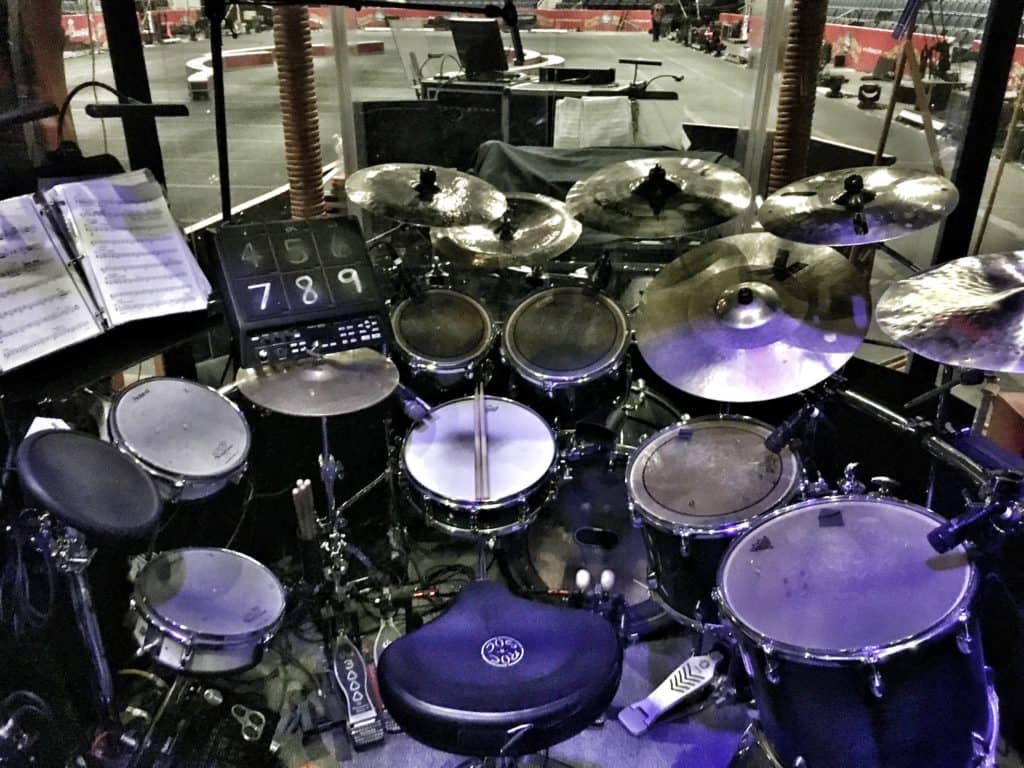
The SPD-SX was almost a second instrument
A big part of the show ran through a Roland SPD-SX. The click tracks and a lot of the electronic drum sounds were programmed into it. The click was panned to one output and the samples were panned to the other. One side kept the band together. The other sent electronic sounds through the main arena PA over the acoustic drums.
The drummer before me had built a very practical numbering system. The nine pads on the SPD-SX were labeled one through nine, and those numbers were written into the charts. So while I was reading the drum part, I was also reading which pad sequence had to start next. Hitting the right square of rubber at the right moment could start the clock for the whole band.
I had roughly three weeks of handover time between Chicago and Indianapolis. My first show was at the United Center in Chicago, where the Bulls play. I remember sitting down and thinking, I know how to play drums. I know how to play with a click. But this is a completely different thing.
Part of the band was on the other side of the portal where the performers entered the arena, so they could not always see me. They were watching the conductor. When the conductor gave the downbeat, the click had to arrive with it. If I triggered the wrong sequence or came in late, I could make the conductor, the band and the electronics feel like three different shows.
I also had a kill switch for the click. Some transitions needed a count, then a drum fill on beats three and four, then a new sequence on the next downbeat. If the old sequence kept running, it could play over the new one. If something went wrong, the safest move was sometimes to pull the click completely, play live, listen for the next four-bar phrase and bring everyone back into the sequence together. I learned very quickly that preparation does not only mean knowing what should happen. It also means knowing what to do when it does not.
The Mountain Gag shows what I mean
The Mountain Clown Gag is a good example of how much was happening at once. It moves through groove changes, tempo changes, half-time sections, stops and starts. The chart had the music, the SPD-SX numbers and the cues I needed to keep in my head before we reached them.
From the outside, it probably looks like a drummer playing a very active clown piece. From the drum chair, I was reading the chart, tracking the conductor, remembering the next pad, listening for the click, checking that the samples landed and watching the gag. It was a lot of little jobs happening at the same time.
Then I had to learn to watch the circus
At first, so much of my attention was on the music and the electronics that it was easy to look down too much. But another important part of circus drumming is what musicians call catching the tricks. I had a small video screen, and I could also see most of the show directly. When someone landed a flip, hit a high-wire trick or finished a visual gag, I needed to catch that moment with a fill and a crash.
George Hooks was one of the great circus drummers I looked up to. Players at that level could catch a trick inside an odd subdivision, color exactly what happened on the floor and return to the music without bending the time. I will not pretend that was the part of the gig I was best at. It took me a while to understand it and get comfortable with it. But it changed the way I think about accompaniment. Sometimes listening also means watching.
The fill was not there to show the audience what the drummer could do. It was there to make the trick feel bigger. That difference sounds small, but it is a big lesson. The best choice is the one that serves what everyone else is doing.
Three shows in one day changes the job
A Ringling show was a little more than two hours, and Saturdays commonly had three shows. That meant more than six hours of intense playing in one day, before counting warmups, sound checks, resets and everything around the performances.
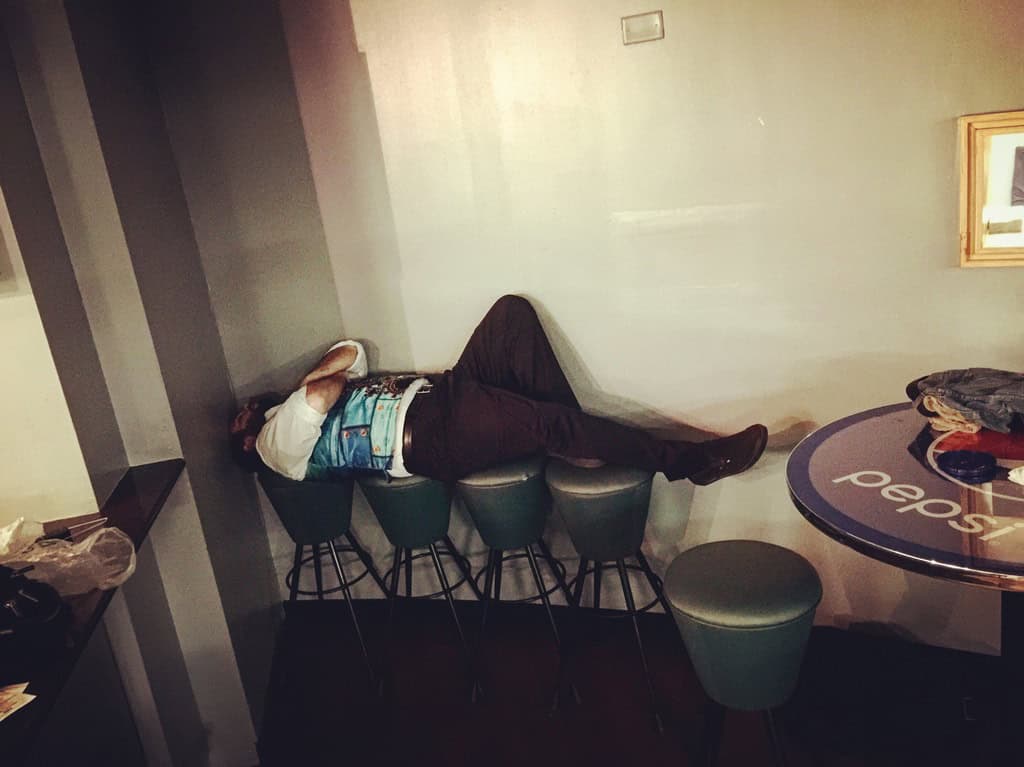
The worst schedule was called a nine-pack: three shows Friday, three Saturday and three Sunday. Luckily, I only did one. It was in Richmond, Virginia. There is a photo of me stretched across a row of bar stools between shows, still in part of my costume, because I was too tired to do much else. The photo is funny now, but it is also a pretty accurate picture of that weekend.
Houston was another test. I remember playing more than 50 shows in roughly three weeks. My hands were cracking open and bleeding, and by the end the mental fatigue was as real as the physical fatigue. You still had to read the chart, trigger the right sequence, watch the conductor, catch the tricks and make musical decisions. The arena did not care that it was your eighth or fiftieth show of the run.
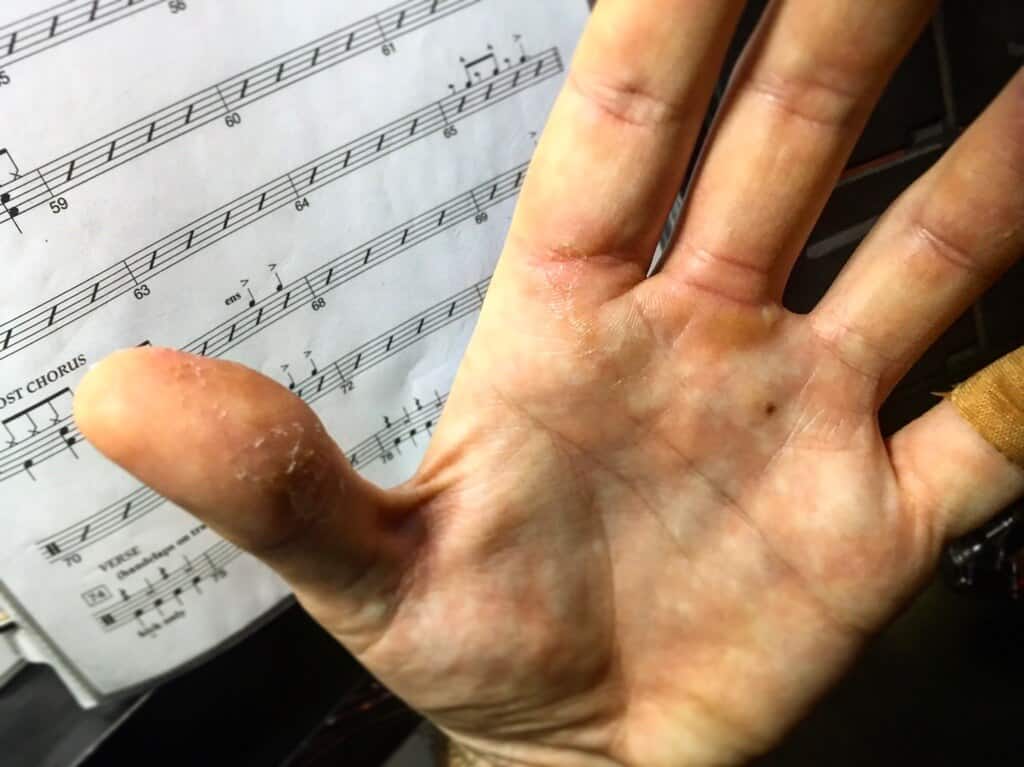
Repetition exposes everything. If there is tension in your hands, a weak spot in your setup or a place in the chart you do not fully understand, that many shows will find it. It also teaches you how to pace yourself, stay economical and protect your concentration.
What more than 500 shows taught me
Preparation includes a way out
It is good to know the perfect version of the show. It is better to know how to recover when the perfect version disappears. The kill switch, the four-bar phrases and the ability to let the band play live were not backup ideas I wanted to use, but knowing they were there kept a small mistake from becoming a large one.
Attention can be trained
At the beginning, the chart, conductor, screen, SPD-SX and band felt like five separate demands. Eventually they became one job. The circus taught me how to spread my attention without letting the groove become vague. That skill has helped me in every recording session, production show and complicated live situation since.
Professional does not mean perfect
Mistakes happen in live music, especially inside a show with that many moving parts. Being professional means recognizing the problem quickly, protecting the music and recovering without panic. Sometimes the most musical thing I could do was stop trying to force the sequence and simply play the band through it.
Play the production, not just the drum part
The chart mattered. The sound of the drums mattered. But the real goal was helping an arena full of people experience one complete show. The conductor, performers, clowns, sound crew, band and drummer were all part of the same moment. That is still how I try to approach music now.
I do not miss nine-packs, but I am grateful for what the job taught me. It still shapes how I play, record and coach drummers. If you are working on charts, click tracks, live electronics, auditions or simply staying calm while playing under pressure, that is the kind of practical work I bring into my private drum coaching.
Explore private drum coaching →
The circus gave me plenty of stories. More importantly, it taught me how to keep the music moving when the plan changes, which is still one of the most useful skills I have behind a drum set.